EST. 2014 — BALI, INDONESIA
Tanah yang Bercerita.
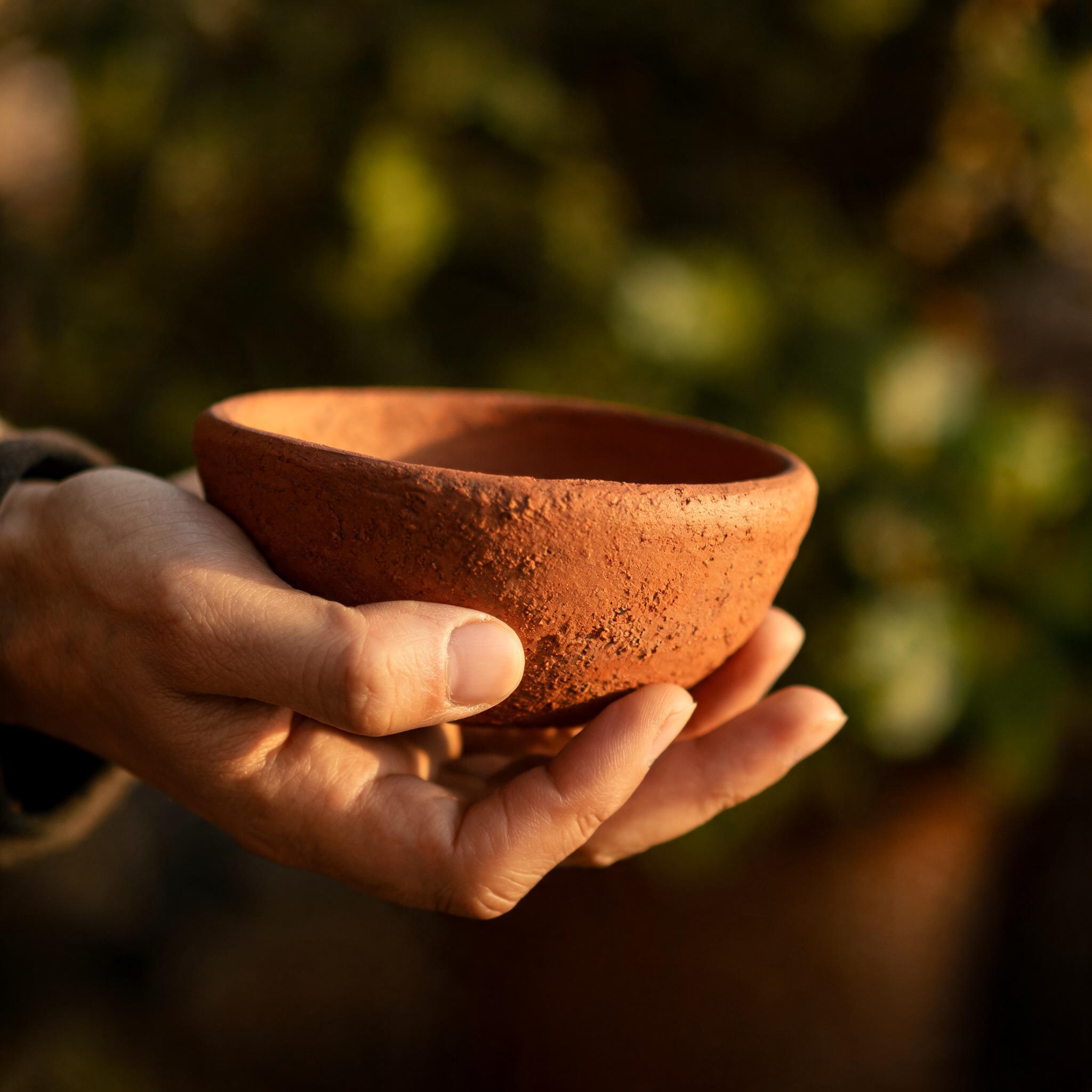
Earth that tells stories. Each vessel carries the memory of fire, the patience of hands, and the silence of the kiln.
OUR ORIGIN
The Earth Remembers
Tanah Bara was born in 2014 from the red laterite soil of Gianyar, Bali, where Wayan Sudirga first pressed his thumbs into a lump of clay at the age of 17. For 28 years, he shaped stoneware in a workshop shaded by frangipani trees, listening to the crackle of wood-fired kilns that reached 1,230 degrees Celsius over 72-hour cycles. The clay itself—dug from riverbanks 12 kilometers east of Ubud—carries flecks of volcanic ash and iron oxide, giving each piece a warmth that no glaze can replicate.
After a decade of apprenticeship under Japanese master potter Kenji Matsumoto in Mashiko, Wayan returned to Bali with a philosophy that fuses Indonesian earth with wabi-sabi imperfection. Every bowl, plate, and vessel is thrown on a kick wheel, trimmed with a bamboo rib, and fired in a noborigama climbing kiln built from 4,200 refractory bricks. The process is slow, deliberate, and unrepeatable. No two pieces are identical; each bears the fingerprint of the maker and the unpredictable kiss of flame.
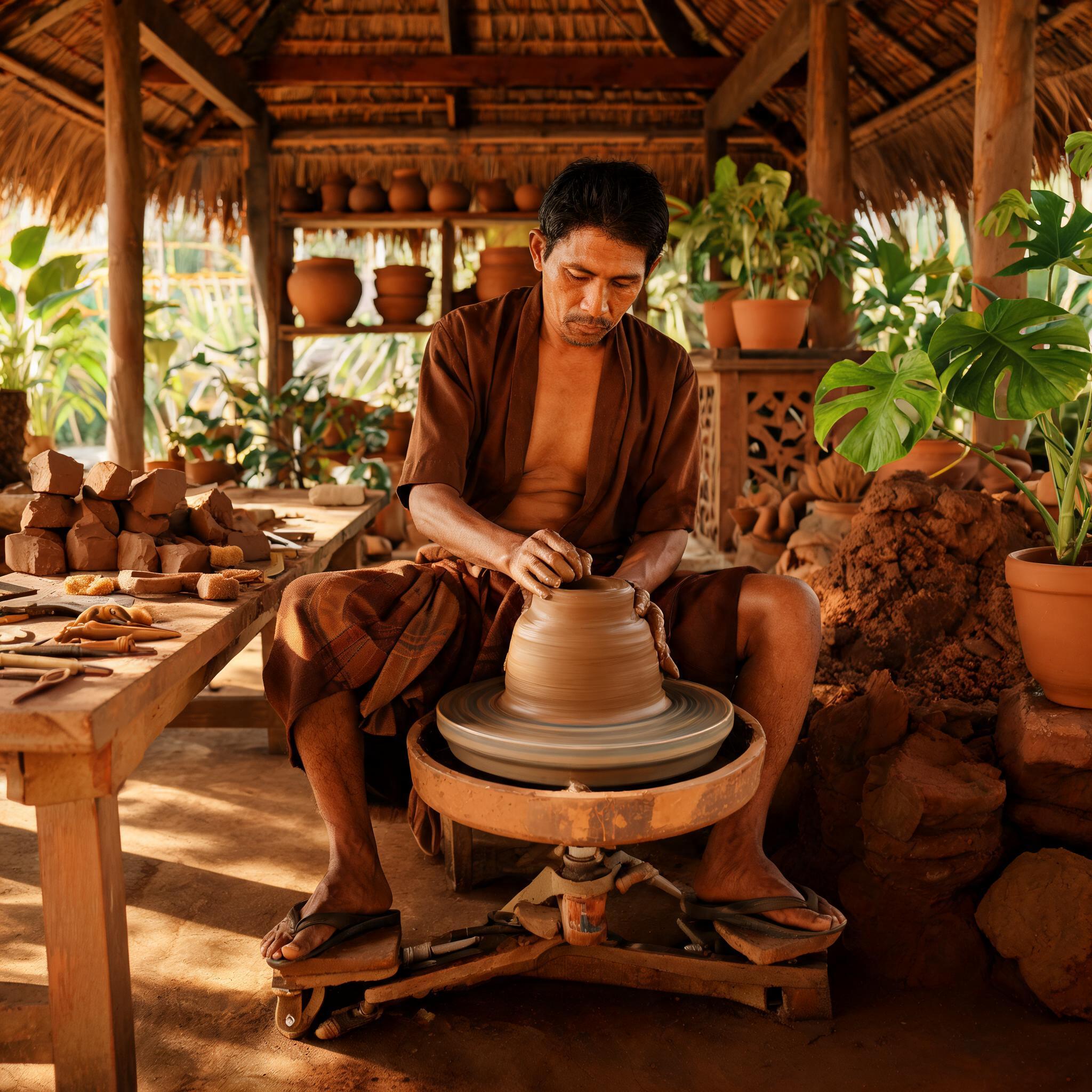
Wayan Sudirga at his kick wheel, Gianyar studio, 2024. The wheel has been in use since 1998.
Rimba Bowl
Wide, shallow form with an unglazed exterior revealing the raw terracotta body; interior glazed in ash white. Diameter 28 cm.
Gunung Plate
Deep plate with a volcanic glaze that pools in dark umber at the rim. Fired at 1,260°C for 68 hours.
Sungai Vase
Tall, narrow-necked vase with a flowing smoke-grey ash drip, born from rice straw ash. Height 34 cm.
Api Cup
Small, thumb-indented cup with a speckled iron glaze. Holds 180 ml. Fits the palm like a stone worn smooth by a river.
THE CRAFT
From Earth to Flame
Digging the Clay
Our clay is sourced from a single deposit in the Petanu River valley, 14 km from the studio. It is aged for 6 months in open pits, allowing organic matter to decompose and the clay to develop plasticity. Each batch is numbered and tested for iron content (4.2% average) and shrinkage rate (8.5%).
Throwing & Trimming
Every piece begins on a hand-powered kick wheel, rotating at roughly 60 rpm. The potter uses a bamboo rib to compress the walls, reducing thickness to 4 mm for bowls and 6 mm for vases. Trimming is done at leather-hard stage with a steel loop tool, leaving a subtle spiral that catches light.
Bisque Firing
The first firing reaches 980°C over 12 hours in an electric kiln. This removes all mechanical water and hardens the clay for glazing. The studio uses a 22 kW kiln with a digital controller, but the ramp is manually adjusted based on humidity readings.
Glazing & Final Fire
Glazes are mixed from local materials: volcanic ash from Mount Agung, limestone from Bukit, and iron oxide from Jembrana. Application is by dipping, pouring, or brushing—never sprayed. The final firing in the noborigama kiln climbs to 1,260°C over 72 hours, fueled by coconut husks and teak offcuts. The kiln is cooled for 3 days before opening.
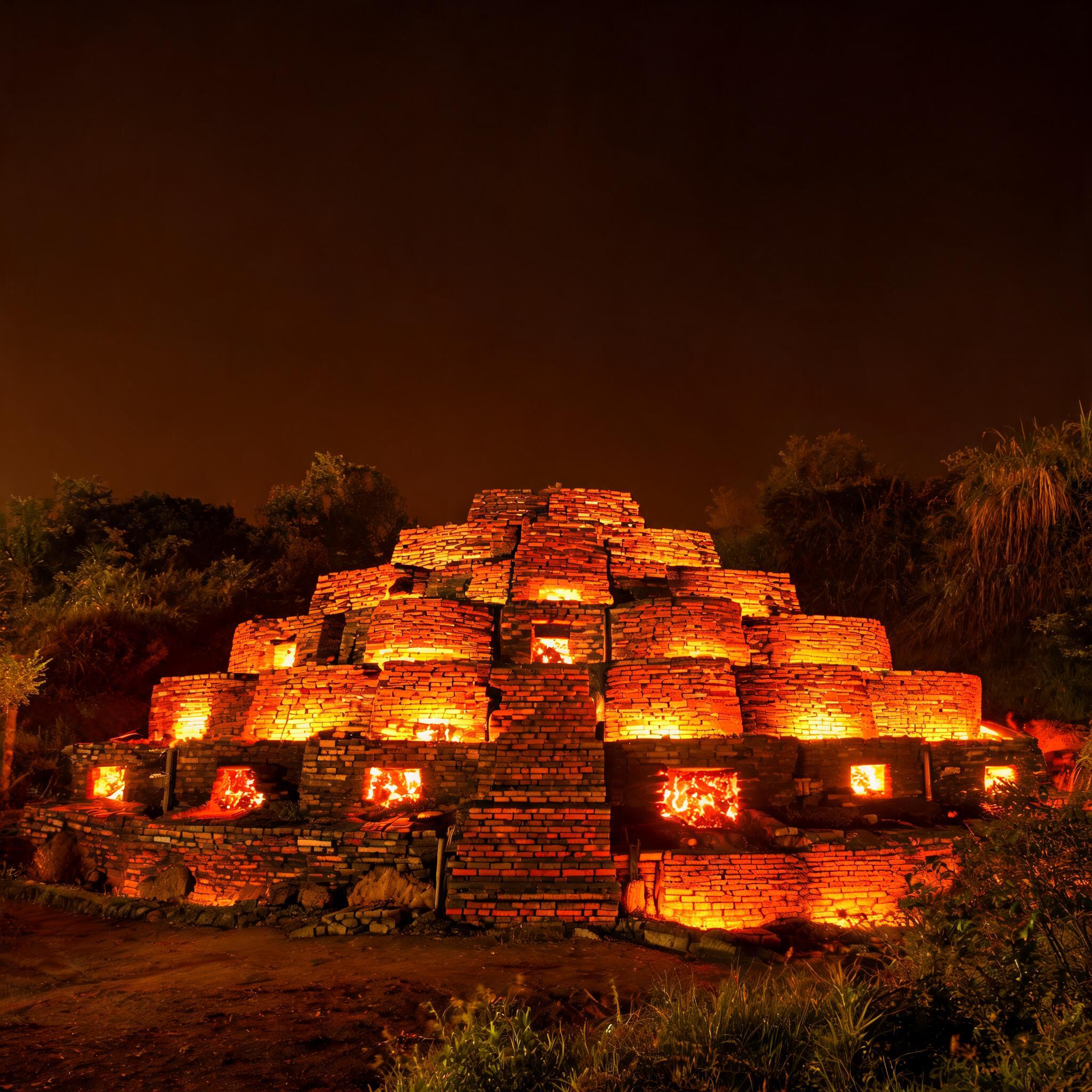
The noborigama kiln during a firing, reaching 1,260°C. The bricks glow a deep orange after 60 hours.
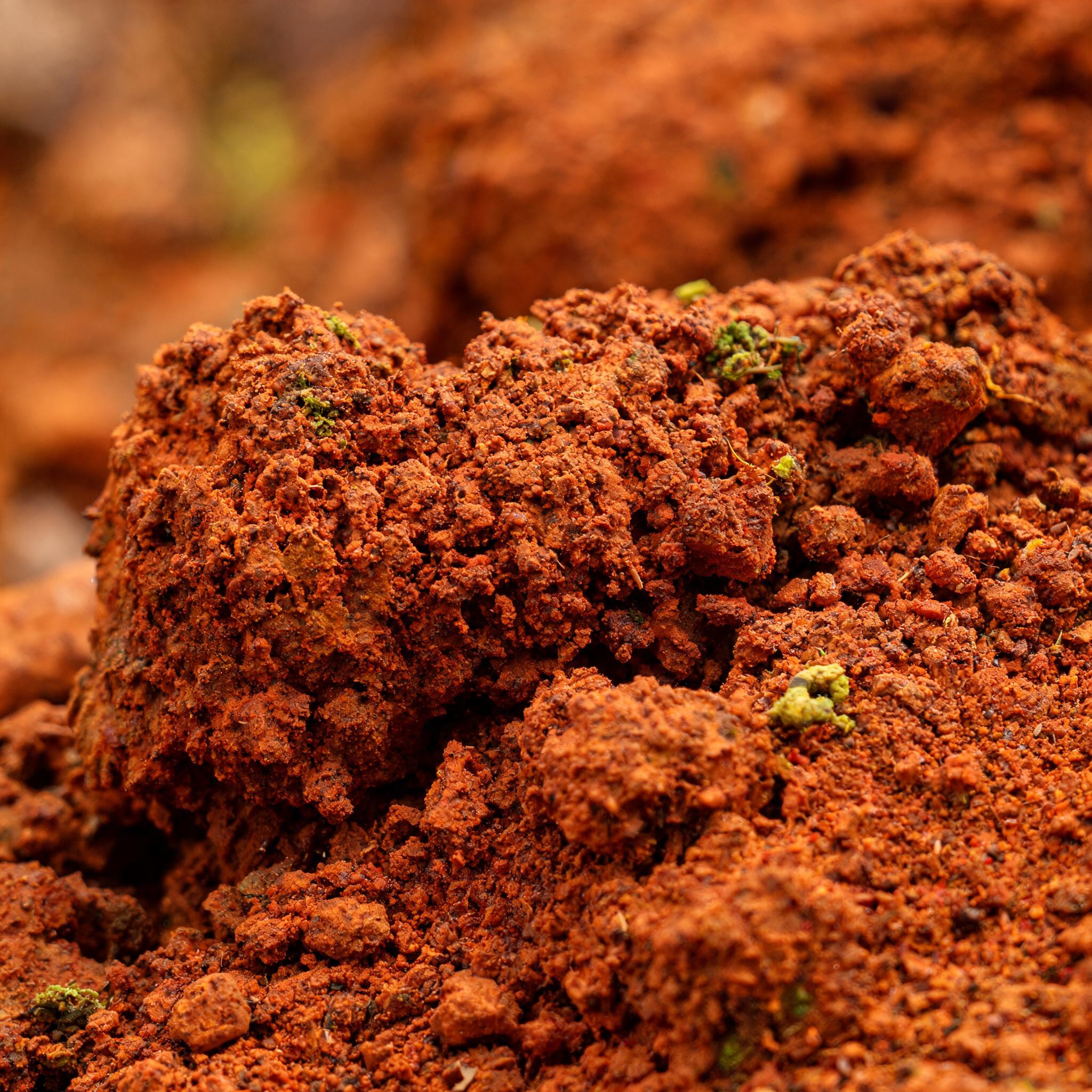
Raw laterite clay from the Petanu River deposit, aged for 6 months. Iron content: 4.2%.
THE MATERIALS
What the Earth Gives
The clay body is a blend of three materials: 60% Balinese laterite, 30% kaolin from Bangka Island, and 10% feldspar from Java. The laterite—rich in iron and aluminum oxides—gives the fired stoneware its distinctive terracotta hue, which deepens from a pale salmon at 1,100°C to a dark rust at 1,260°C. The kaolin adds whiteness and strength, while the feldspar acts as a flux, lowering the melting point of silica.
Our glazes are ash-based, following a tradition that dates back to 12th-century Chinese celadons. We burn rice straw from local paddies to produce a fine, white ash that yields a translucent, crackled surface. For darker glazes, we add iron oxide—up to 8% by weight—creating a deep, lustrous brown that pools in crevices. Every glaze recipe is recorded in a ledger that now spans 14 years and 340 entries.
The noborigama kiln itself is a material statement: 4,200 bricks, each laid by hand in 2015, with a chimney that rises 8 meters. It consumes 1.2 tons of wood per firing, producing a unique atmosphere of reduction and ash deposit. The kiln is the heart of the studio; its rhythm dictates our calendar.
VOICES
Spoken in Clay
BEGIN THE STORY
Bring the Earth to Your Table
Each piece is made to order, with a lead time of 6–8 weeks. We ship worldwide from our studio in Bali.
Inquire Now